
Cornelio Ramirez, Jr. (1965-2026) : Sparks of Love from America’s Steel Mills
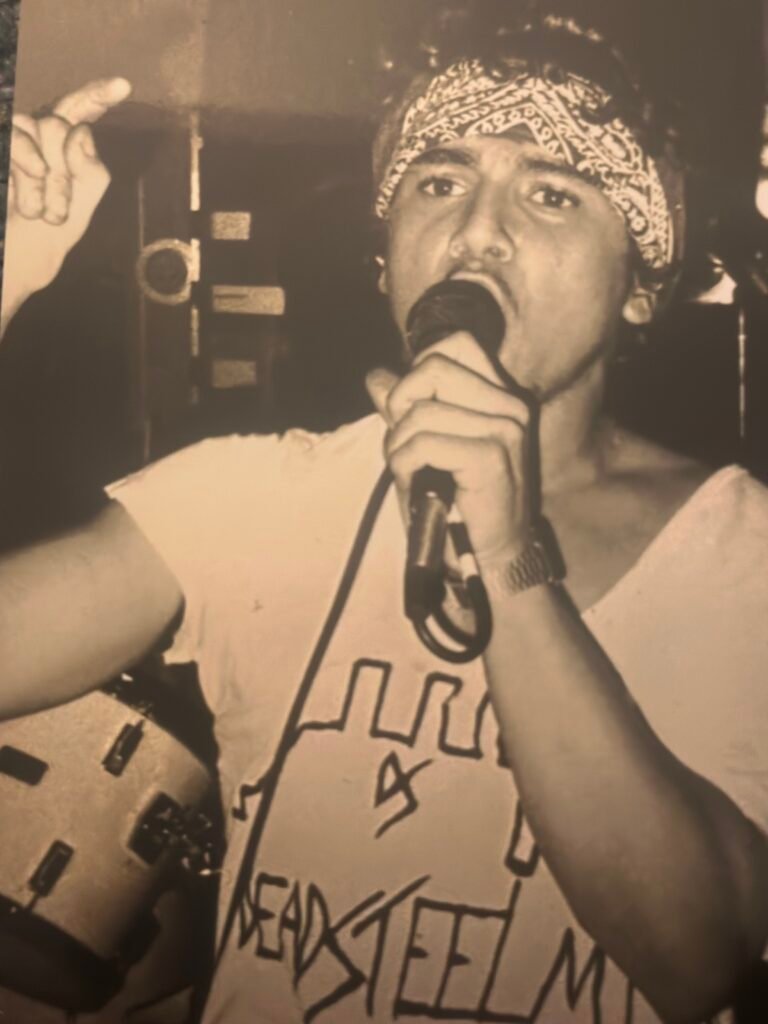
My friend Corny Ramirez.
If you believe, as I do, that sense of place is a powerful narrative, then Cornelio “Corny” Ramirez, Jr. lived a real Chicago life. His working-class voice was heard from the top of the 95th Street Bridge to the ripples of the Calumet River. Corny was a good union man, a militant punk musician, and a loving husband and father.
Corny died peacefully on Nov. 2 in his home five blocks from the Indiana border on the Southeast Side. He was 61 years old.
His inspiration may be his greatest story.
I met Corny in the summer of 1995 when he was the 5’3” lead singer of Dead Steelmill, based out of the Southeast Side. They were punk with a dash of honky tonk rhythms.
They sang about issues in their neighborhood such as “Pollution,” which addressed the fact that cancer rates were 50 percent higher in Southeast Side steel mill neighborhoods, and the still-timely “No More Neo Nazis.” The four-piece Dead Steelmill recorded 17 songs with Steve Albini. The late legendary Wisconsin Steel Mill union leader Frank Lumpkin became a fan of the band at age 78. He attended several Southeast Side gigs.
Dead Steelmill became members of Lumpkin’s Save Our Jobs Committee. Lumpkin worked at Wisconsin Steel for 30 years before being laid off. The band played fundraisers for Lumpkin at area union halls. “The very fight against corporate America is what keeps Frankie alive,” Corny told me in 1995. “Frankie told me how we reignited his ignition.”
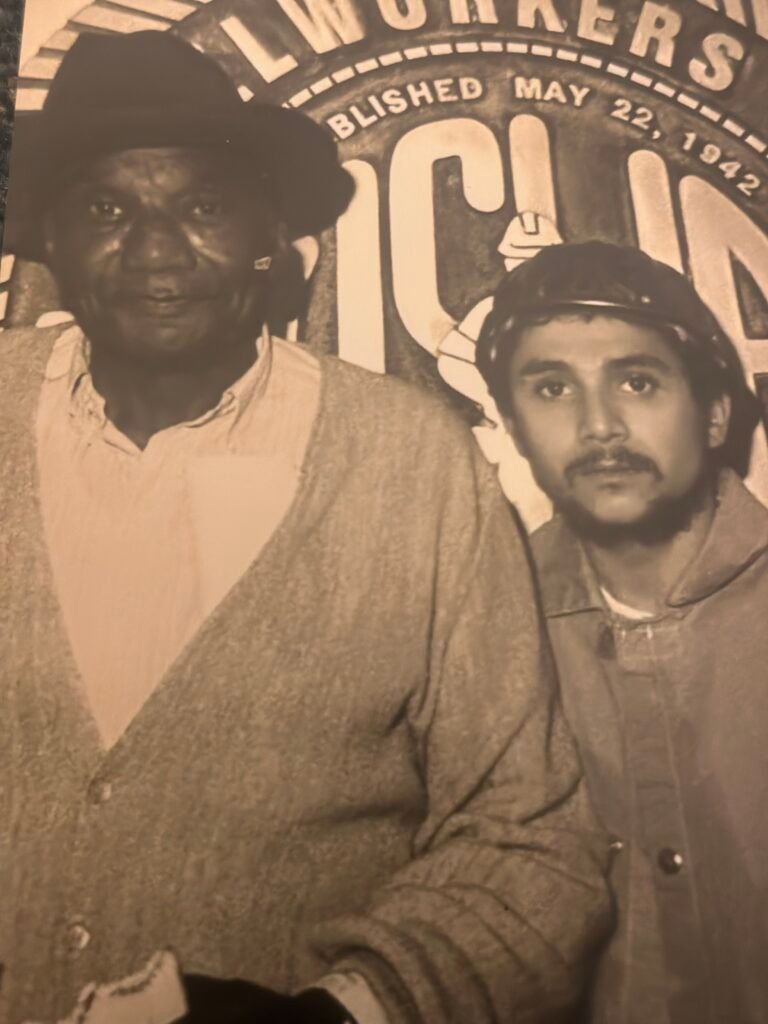
Frank Lumpkin (L) and Corny planning Good Trouble. (Provided.)
In October 2021, while walking to his upstairs bedroom, Corny fell backwards down 18 steps and landed on the floor. He broke the cervical spine in his neck. Corny was paralyzed from the neck down. He caught COVID after the accident. He dealt with serious wounds on his backside. He died of complications from the injury.
For the last five years of his life Corny was confined to a large hospital bed in his living room where he watched television and listened to music. His rotation included “The View,” “Judge Judy,” “American Masters,” “Frontline” and the Holy Name Cathedral mass every Sunday morning.
His playlist consisted of ‘50s rock and roll, Mexican music, rhythm and blues, and punk. His long-time soulmate Frances was a caretaker as were their daughters Serena and Xochitl, and cousin Irene Ortega. Corny’s best friend Christopher “Kito” Sandoval visited every Wednesday for dinner. Kito played guitar with Corny in the neighborhood Shake Rattle and Roll band from 2018 until Corny’s accident.
I visited Corny a couple of times in the spring of 2025 while working on “After the Glitter Rain,” a long-form story for Newcity magazine. He smiled more than I did.
“This is how it is going to be,” Corny told me while looking at the ceiling of the small frame house he lived in for 39 years. “I’ve come to terms with my life and how I am. It didn’t come easy. Being angry, and mad and sorrowful–those were big hurdles. What makes it a whole lot easier for me is to have someone who loves me unconditionally.” Frances looked on. She was never far away. They were connected by faith.
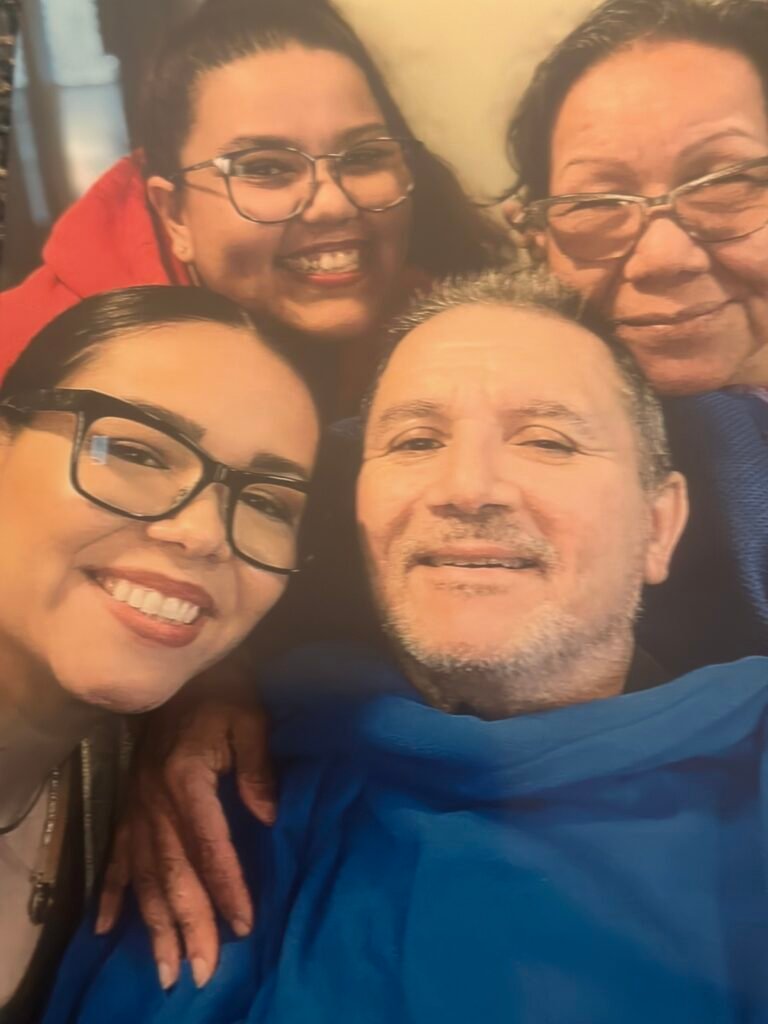
Corny and family: Daughters Serena (top left) and Xochiti, Frances top right. (Provided.)
Corny was born on July 28, 1965. He grew up in South Deering. He learned HVAC skills at Chicago Vocational (CVS), the same place that produced real Chicago guys like Dick Butkus and Bernie Mac. Corny became a maintenance mechanic at Newark Electronics on North Pulaski and ended his career in 2021 as a stationary engineer for Local 399 on the South Side.
His father Cornelio Ramirez, Sr., and his uncle worked in the neighborhood mills. Corny’s brother Ray was crushed to death in a 1975 accident at U.S. Steel South Works. Ray was twenty and a child was on the way. Corny’s band recorded “Industrial Accident” about the event. When the band formed in 1985, The Accident was first choice for a name as a tribute to Ray. But Dead Steelmill was selected because the mills were closing everywhere.
I’ve previously written that a place isn’t a place until it is remembered. That is the highest tribute to Corny’s legacy.
Corny told me, “My idea was to keep the idea of the people working alive for the next generation to know that this happened here.” Dead Steelmill’s first gig was at a block party on July 20, 1985, the day Corny married Frances.
Frances’s father Francisco Bautista was a butcher in an independent meat packing company in South Chicago. She met Corny when he was a teenager. Corny was dancing alone in front of a club near 85th and Commercial because he was too young to gain entry. She couldn’t believe his name was “Corny.” She would learn it also be short for considerate. “He was like a magnet to me,” said Frances, another child of the neighborhood. “He was always around music. He always made me laugh.”
Dead Steelmill was politically keen and prescient. The band’s wicked sense of humor empowered their message. In 1996 the band recorded “Trump (is coming)” when America’s grifter opened his casino in Gary. Trump filed for bankruptcy on the Gary property in 2005. Corny sang, “….Don’t you know it’s just a trick, he’s got so much money and what’s he trying to prove? And he’s only after you and you and you.” The thrash song appears on the 2003 Dead Steelmill release “Sweatshop.” They sang “Just Got Laid Off” and “Side Jobs” at church benefits.
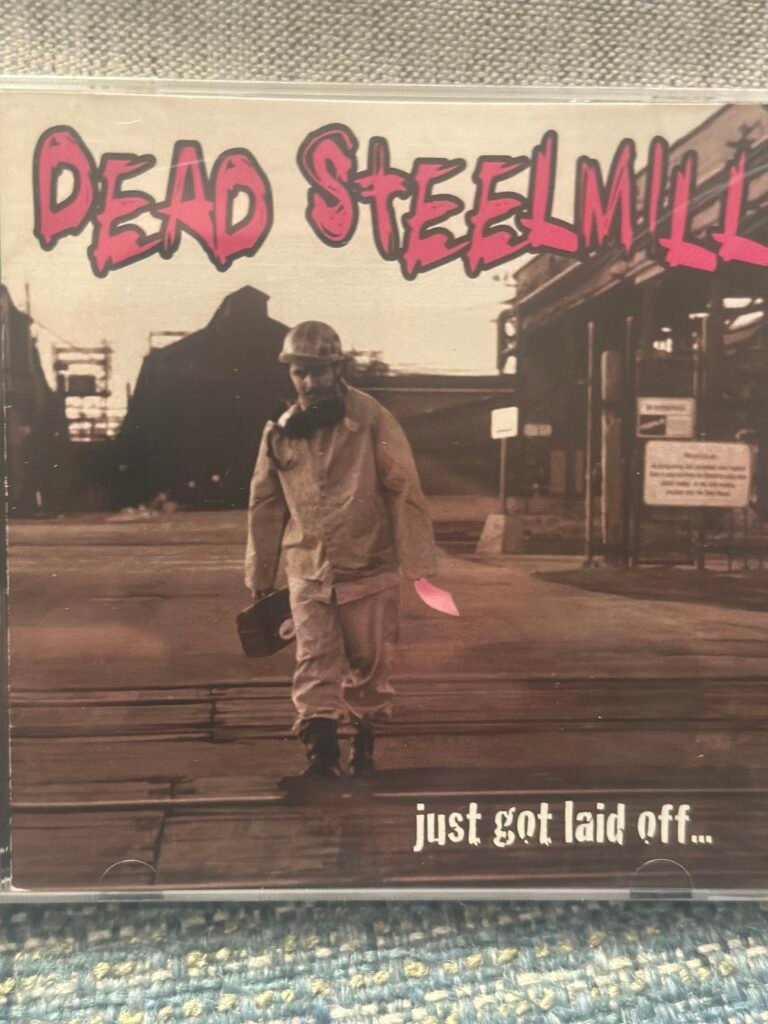
1996 CD on Wisconsin Steel Records
Last year Corny told me, “It is a blessing to reflect on the simple things in life. Just watching all this hatred is divide and conquer for the sake of the mega rich? The idea for our songs is what we were living. And we’re still going through it.”
Chicago pop-rock musician Phil Angotti is from the neighborhood. He knew of Corny but they did not share any gigs. “Those of us grew up there, it’s almost like a badge of honor,” Angotti said on Thursday. “As a kid there were the steel mills, the grain elevators, bars on every corner. A toughness gene is built into you. Your music is almost like picking up your tools and going to work. There’s a deep sense of pride.”
So of course Corny submitted his midterm mail-in ballot on Oct. 19. He understood the assignment.
Corny’s union built Corny a $70,000 wheelchair, according to Frances. “We’ll probably donate it back to someplace like Shirley Ryan (AbilityLab),” she said. “It is a very good wheelchair.” It has a meaningful history.
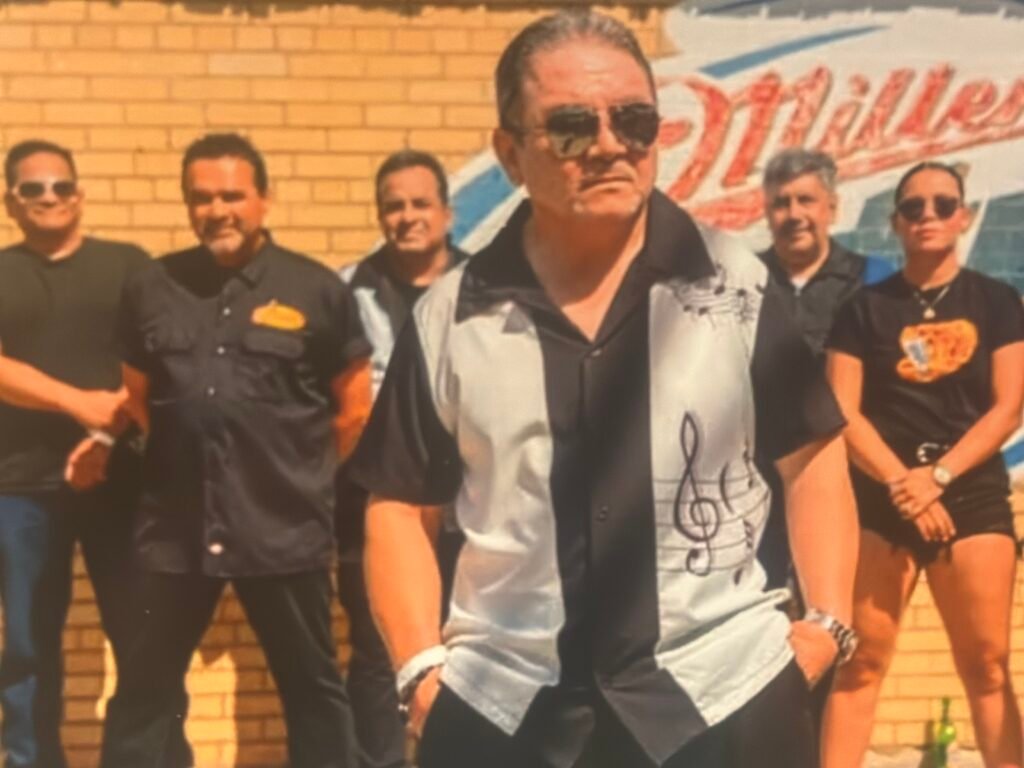
Corny with his Shake, Rattle & Roll band, circa 2018
Corny was a member of the South Chicago Mexican American Social Club and supported the Southeast Side community with numerous charity events. He gave money to the Mercy Home for Boys and Girls and the Jones Memorial Community Center in Chicago Heights. Corny was a North Star for the Southeast Side.
He understood that true communities share one heartbeat. Corny knew the sweet spots in one of the city’s grittiest neighborhoods, and his faith and passion helped him navigate bitter challenges. Of course, Corny’s family has been overwhelmed with tasks since his passing, but they are making sure of one thing for visitation:
Cornelio Ramirez, Jr. will be wearing his proud union pin on his burgundy suit.
Visitation will be from 2-8 p.m. Monday at the Elmwood Chapel, 11200 S. Ewing Ave. Closing prayers are at 9 a.m. Tuesday at the Elmwood Chapel, followed by a 10 a.m. funeral mass at Our Lady of Guadalupe Church, 3200 E. 91st. In lieu of flowers, his wish was to donate a memorial offering in his honor for Mercy Home for Boys and Girls.


Leave a Response