
Major to Mayor to America’s First Black Elected Female Governor: Inspirations of Soul Singer Major Lance
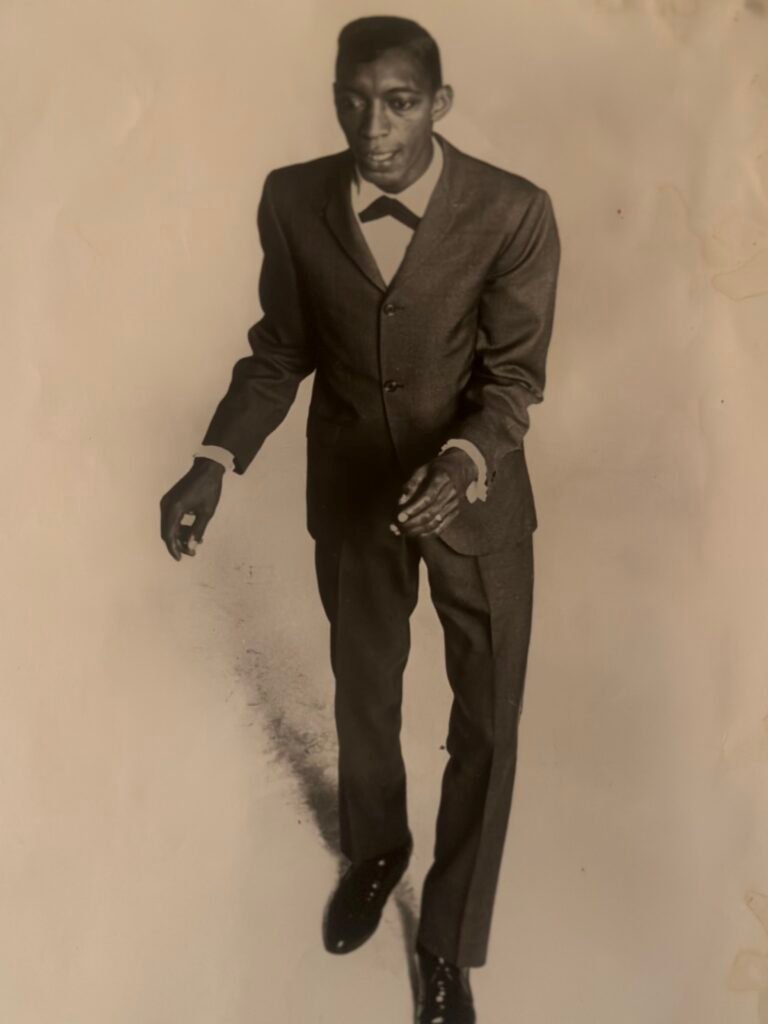
Promo picture from the author’s collection.
Tomorrow seemed so far away in the summer of 1982.
That’s when I hopped into my rusty 1974 Dodge Swinger and drove to East Point, GA., from Wicker Park to see the Chicago soul singer Major Lance.
No one assigned me a story. I had no travel budget. There were no publicists. I made the trip for the promise of music and America’s power of redemption.
I made it home.
I knew Lance had a hit with 1963’s “Monkey Time” and “Um, Um, Um, Um, Um, Um” in 1964, but it was the writings and encouragement of Chicago soul-ologist Robert Pruter that inspired me to take a deeper dive.
In 1982, Lance had just finished serving three years of a 10-year sentence in the medium-security Georgia Metro Correction Center, the Stone Mountain Center, and the Rutledge Correctional Center in Columbus, GA. where he was an English teacher’s aide.
Lance was arrested in a 1978 sting for selling cocaine. He gave me his first interview in four years. “All I remembered was something like 13 guns pointing at my head,” Lance told me. “That changed my life at that point. They didn’t have to give me time. I guess you could say I was demoted from the Major and I’m working my way back.”
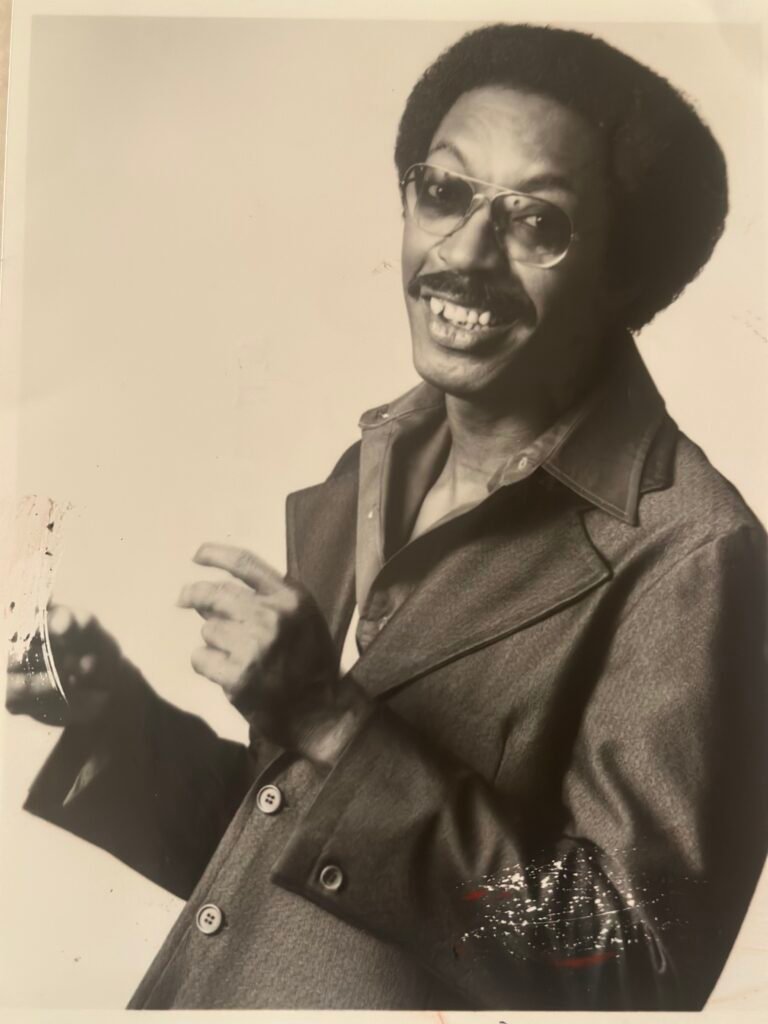
Major Lance, circa 1982 (from author’s collection.)
Paul Ford, then the superintendent of the Metro Center, told me that Lance was a model prisoner. He helped develop a children’s program at the prison. When fellow inmates’ wives visited with their children, Lance and other inmates put on a “Sesame Street” type review. During the last six months of his sentence, he worked for the Georgia State Patrol as a cook and maintenance man. “My post-commander Sgt. Abernathy wrote a song for me called ‘I Am a Man,” Lance said in tones of nuanced pride.
My 1982 conversation with Major Lance became one of my earliest bylines for the Chicago Reader. And throughout the next decade I tried to champion Major Lance’s work while writing for the Chicago Sun-Times. He was overlooked in Chicago. He died of heart disease in September 1994. He was only 52 years old.
Major’s daughter is Keisha Lance Bottoms, the former mayor of Atlanta and Georgia’s newly elected governor. Lance moved to Atlanta around 1967 and Keisha was born in Atlanta in 1970. Her mother, Sylvia Robinson (no relation to Sugar Hill Records founder) took care of the family during her father’s legal and financial troubles. In her new memoir “The Rough Side of the Mountain,” Bottoms said her father stood at 5’10” and weighed 145 pounds and that his “stature never matched his big personality.”
Major Lance admitted his personality kept him moving. “What I learned in prison were two things that were missing,” he told me in ‘82. “Patience and discipline. I used to move first and think later. Now I try to think and then move. I was my own worst enemy.”
Patience and discipline: And now his daughter is the first elected Black female governor in U.S. history.
In her memoir, she wrote, “The desire for the spotlight was in my DNA, thanks to my daddy. He was a showman and I was proud to be like him. Daddy never tried to rein in my self-image as a star (or, at least, a star in the making). If anything he encouraged it.”
I never drove back to the Atlanta area to see Lance (although I did drive back in 1993 to see Curtis Mayfield) , but I tried to stay in Lance’s orbit when he returned to his hometown. Lance was born in rural Mississippi but he was a product of the Cabrini-Green homes. One of nine children, Lance was a 21-year-old clerk at Cabrini Drugs near Perry Street when “Monkey Time” became a hit. He was also dancing on the Jim Lounsbury’s Record Hop television show. “Monkey Time” was written by Mayfield, Lance’s Wells High School compadre.
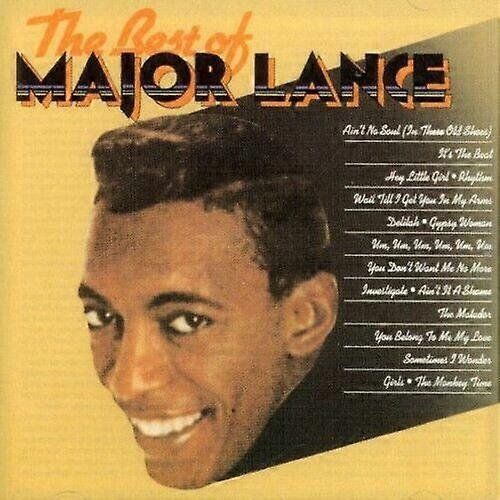
Lance also took up boxing with future songwriter-soul singer Otis Leavill at Wells. Lance said he compiled a 43-2-2 record as a featherweight in Golden Gloves competition. He weighed in at 127 pounds. The footwork of dancing and boxing served him well. “I was doing good except for the last two fights,” Lance said. “That’s when I knew it was time to look for something else.”
In 1962 Lance had signed with the late Carl Davis’s Okeh label. The Chicago soul community was tight and Davis knew of Lance. “When Major found out I was with Columbia (Okeh’s parent company), he came by all the time,” Davis told me in August 1982. “At the time I didn’t drink much coffee, but he used to run to the store and get me coffee every 15 minutes. I finally signed him just to keep myself from drowning in coffee. Major was no Johnny Mathis, so I had to create a musical environment in which he could work.”
Davis and jazz bassist-arranger Johnny Pate backed Lance with a brass section centered on two trombones (including Morris Ellis, also played with Curtis Mayfield, Lou Rawls, Jerry Butler) and baritone saxophone. The formula worked. Besides “Monkey Time” Lance and Davis had hits with “Hey Little Girl” (1963), “Um, Um, Um, Um, Um, Um,’ “Rhythm (1964), and “Sometimes I Wonder” (1965). “I wanted to try ballads,” Lance said. “But they never let me. We had the label of the ‘Chicago Sound,’ but it was hard to get away from it. Everywhere you looked it was horns, horns, horns. But it was selling.”
Lance called Davis a father figure. At first he kept his arrest secret from Davis. “But he never downed me,” Lance said. “He told me everybody makes mistakes and not to hold my head down but to keep up and keep going. I needed that.”
In 1983 Lance released the album “I Wanna Go Home” for Kat Family Records in Atlanta. Lance channeled Smokey Robinson on the disco-tinged title ballad that addressed his prison time. He wondered who would take care of his family and tuck his child in bed. And he sang, “Keisha better miss you baby….Darion you gotta carry on boy.…” Sometimes Lance would perform his hits in prison concerts but he would also include new songs. Superintendent Ford said, “And when he did ‘I Wanna Go Home’ it almost put the whole population in tears.”
When we met in 1982 Lance was unaware of the Carolina Beach Music scene that later became a major obsession for me. The sprightly horns and dance rhythms of Beach Music make it a cousin of Chicago soul music. After his release from prison, Lance ordered some Beach music records to try to figure out what people were talking about. Beach music had moved inland to the Buckhead neighborhood of Atlanta. Three Major Lance songs were included on the fantastic 1982 Epic double-album release “Endless Beach.”
Lance told me he forgot his chipper cover of Van “The Hustle” McCoy’s “Everybody Loves A Good Time,” which is on the compilation. Lance’s music also became a cornerstone of England’s serious Northern Soul scene that included Bobby Womack & The Brotherhood, Terry Callier, Jerry Butler and more.
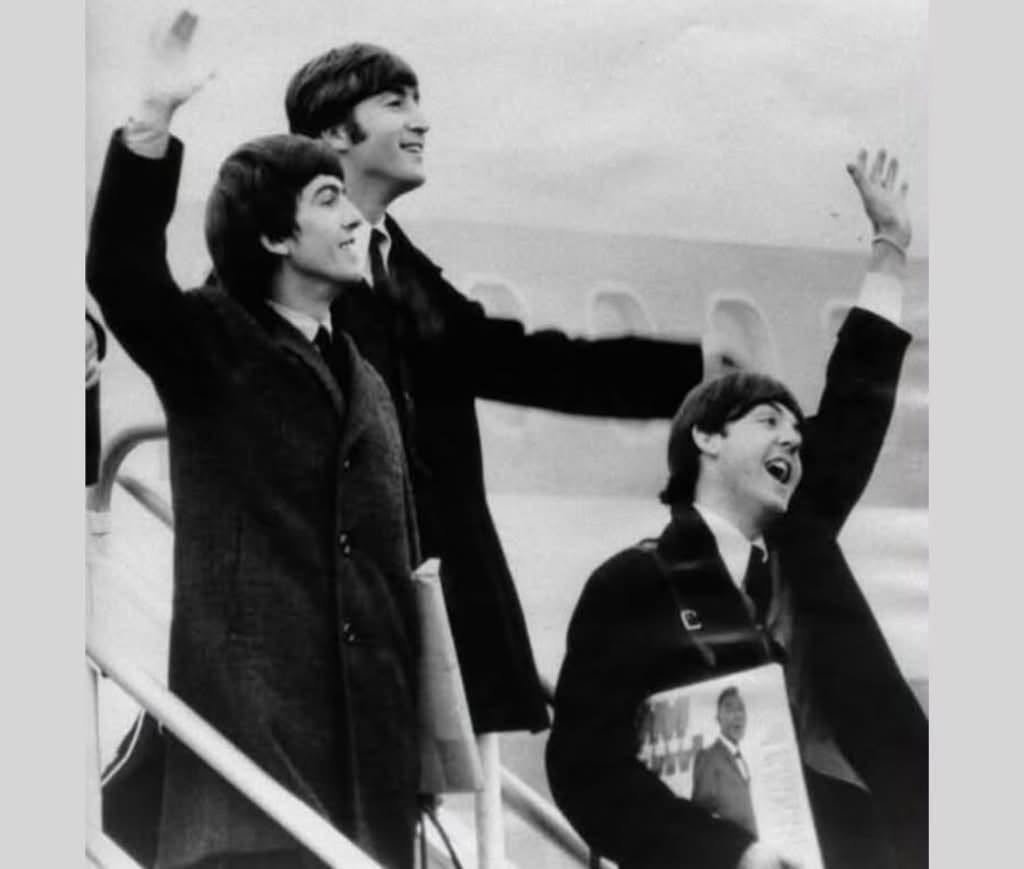
Paul McCartney digging Major vinyl Feb. 22, 1964 at Heathrow Airport in London.
In July, 1989, Lance was in Chicago to accept a “Chicago Legends” award at the R&B Report Forum at the Hyatt Regency Hotel. He collapsed a week before the forum and spent four days in Cook County Hospital. A week after his discharge, Lance was singing and dancing at the Blue Room nightclub on East 79th Street. Audience members included the blues dancer-raconteur Alvin “Twine Time” Cash and Gino Battaglia, owner of the since-closed Blue Chicago on the near north side. Battaglia booked Lance for his club. It was a rare crossover north side appearance for a soul singer (i.e. Cicero Blake, Otis Clay, Tyrone Davis) , often neglected because of the city’s blues imprint.
Before the Blue Chicago set I asked Lance to show bandleader and Stax Records session musician L.V. Johnson (1946-1994) the scar on his thumb. It was the result of some “Monkey Time” promotional shtick. Lance recalled, “I bought two monkeys for $35 apiece and one got tied up on this perch. I tried to help him down, and he bit the hell out of me. But that’s what broke the record out of Chicago; we had a dance contest and gave the monkeys away.” Fun fact: when Lance toured the United Kingdom in December, 1965 on the power of “Monkey Time” he was backed by the band Bluesology, which included piano player Reg Dwight (future Elton John.)
Lance’s final Chicago appearance was a short set that was part of a soul revue with Gene Chandler, Barbara Acklin and Willie Henderson’s Black Heritage Orchestra at the 1994 Chicago Blues Festival. He wore a sailor’s outfit with one of those white sailor caps Chuck Berry used to wear. Lance was frail and was dealing with glaucoma and heart disease, but the warmth of community moved him forward. Lance would die three months later. He is buried at Washington Memory Gardens Cemetery in Homewood, IL. His headstone says “Thanks For The Memories.”
He made it home.


Leave a Response